
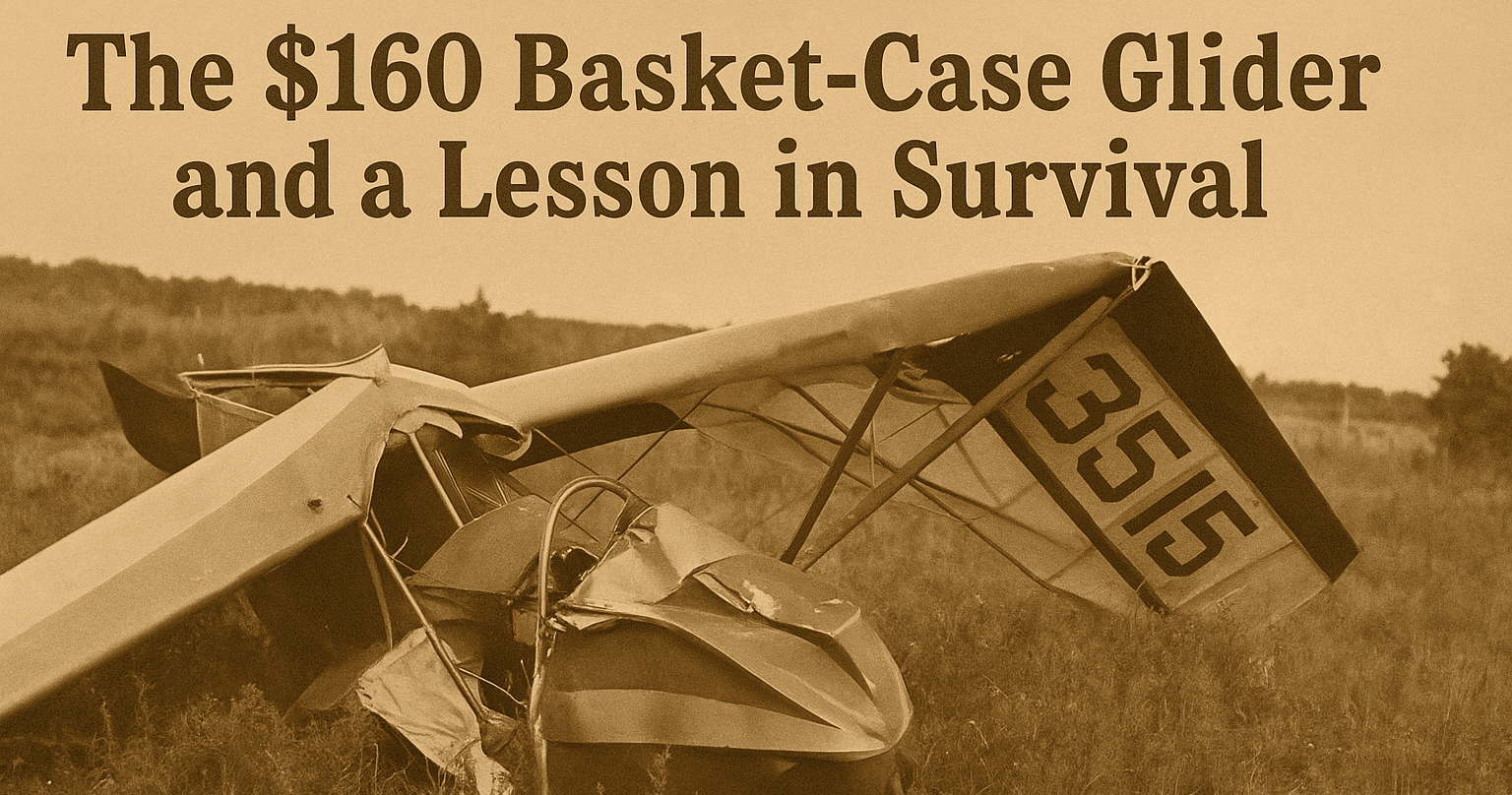
The Basket-Case Glider
By his teenage years, Jim’s fascination with gliders had grown into action. With just $160, he purchased a wrecked Schweizer 1-19. “It was a basket-case,” Jim recalled, but with determination and limited tools he set about restoring it. The project became his first real hands-on education in structure, balance, and the art of bringing an aircraft back to life.
Secret Flights
When the repairs were complete, Jim wasn’t content to leave the glider on the ground. Together with friends, he began launching it in secret using a car-tow system from nearby fields. “We didn’t have permission, but we were eager,” he said. Those clandestine flights gave him a taste of soaring freedom—at least until his mother discovered what he was up to and put an end to it.
A Near-Fatal Lesson
One of those early flights nearly cost him his life. At low altitude, the Schweizer slipped into a flat spin. Jim fought for control and barely survived. “That flight nearly killed me,” he admitted. “I never forgot what imbalance could do.”

The experience left more than a scare. It became one of the most important lessons of his life. From that day forward, the danger of imbalance and the importance of stability were etched into his design philosophy.
Shaping a Designer’s Mind
What began as a $160 restoration project became much more. The repaired Schweizer gave Jim his first wings, but the spin that almost claimed him became the moment that shaped his future as an aircraft designer. Every drawing and every experiment that followed carried the weight of that memory—a commitment to making flying wings safe and balanced.
Share Your Thoughts
This is the second story in our series, Jim Marske: In His Own Words. Have you ever had a close call that changed the way you thought about flying—or life? Share your reflections with the Marske community in the comments below.
Join the conversation.